
Cardiorespiratory fitness is among the strongest modifiable predictors of longevity, and VO₂ max carries greater prognostic weight for all-cause mortality than most conventional risk factors. Its relevance to the conditions you screen for every day is underappreciated.
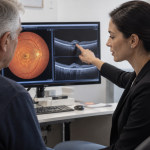
The eye is a metabolically demanding, microvascular organ, and the same fitness that lowers cardiovascular risk protects retinal and optic nerve tissue. Higher cardiorespiratory fitness and regular aerobic activity are associated with reduced incidence and progression of age-related macular degeneration, primary open-angle glaucoma, and diabetic retinopathy, as well as lower cataract risk. The mechanisms — improved retinal and choroidal perfusion, healthier endothelial function, lower systemic inflammation, and better glycaemic control — map directly onto the pathology you monitor through OCT, fundus imaging, and visual field testing.
This gives you an additional, evidence-based lever in patient counselling. When you flag drusen, borderline IOP, a suspicious disc, or early vascular changes, fitness becomes a modifiable factor worth raising alongside your clinical findings — and VO₂ max offers patients an objective, trackable target.
Where structural or functional findings suggest emerging retinal or optic nerve disease, early referral allows co-managed monitoring and timely intervention.
Brisbane Eye Clinic — working alongside optometrists in collaborative eye care.